
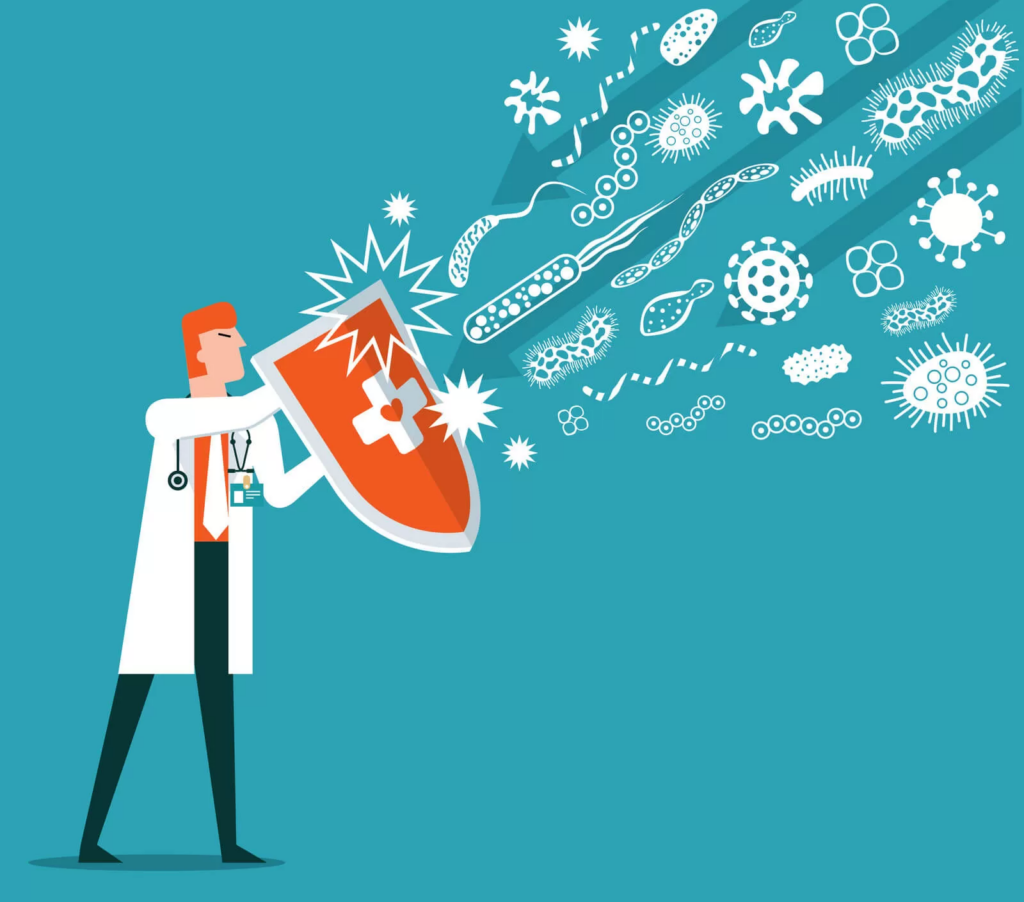
Vaccines have revolutionized global health, preventing millions of deaths each year. But how do they work? What happens in your body after you receive a vaccine? Understanding how vaccines generate an immune response is key to appreciating their role in disease prevention.
At Inno Therapeutics, we focus on developing cutting-edge vaccines that trigger robust and long-lasting immunity. In this article, we break down the science behind how vaccines train your immune system to fight off infections effectively.
1. Understanding the Immune System: Your Body’s Defense Mechanism
The human immune system is a complex network of cells and proteins designed to recognize and eliminate harmful invaders, such as viruses and bacteria. It consists of two main components:
🔹 Innate Immunity – The body’s first line of defense, including physical barriers (skin, mucous membranes) and immune cells that respond quickly to infections.
🔹 Adaptive Immunity – A more specialized response that remembers past infections, allowing the body to react faster and more effectively in the future. This is where vaccines play a critical role.
2. How Vaccines Mimic Natural Infections
Vaccines work by imitating an infection without causing actual disease. They introduce harmless components of a pathogen—such as inactivated viruses, weakened bacteria, or pieces of viral proteins—to stimulate an immune response. This triggers the body to produce antibodies and train memory cells for future protection.
Types of Vaccines & Their Immune Response
There are several types of vaccines, each designed to mimic natural infections in a specific way:
✔️ Live-Attenuated Vaccines (e.g., Measles, Mumps, Rubella – MMR Vaccine)
- Contain weakened versions of a virus/bacterium.
- Produce strong, long-lasting immunity.
- Not recommended for immunocompromised individuals.
✔️ Inactivated Vaccines (e.g., Hepatitis A, Polio)
- Contain killed pathogens that cannot replicate.
- Require booster doses to maintain immunity.
✔️ mRNA Vaccines (e.g., COVID-19 Vaccines – Pfizer, Moderna)
- Teach cells to produce harmless viral proteins, triggering an immune response.
- Do not alter DNA and degrade quickly in the body.
✔️ Protein Subunit Vaccines (e.g., HPV, Hepatitis B)
- Use harmless parts of a virus to trigger immunity.
- Minimize side effects compared to live vaccines.
✔️ Viral Vector Vaccines (e.g., AstraZeneca, Johnson & Johnson COVID-19 Vaccines)
- Use a harmless virus to deliver genetic instructions for producing viral proteins.
- Trigger both antibody and T-cell responses.
3. The Immune Response: What Happens After Vaccination?
After receiving a vaccine, your immune system undergoes three key phases:
📌 Phase 1: Antigen Recognition
- The immune system detects the vaccine’s components (antigens) as foreign invaders.
- White blood cells (macrophages) engulf the antigens and present them to T-cells.
📌 Phase 2: Antibody Production & Immune Activation
- T-cells coordinate the attack and activate B-cells, which produce antibodies—specialized proteins that neutralize the pathogen.
- Some T-cells directly kill infected cells, while others help regulate the immune response.
📌 Phase 3: Immune Memory Formation
- The immune system creates memory B-cells and T-cells, which “remember” the pathogen.
- If the real pathogen enters the body in the future, these memory cells trigger a faster and stronger immune response, preventing illness.
4. How Long Does Immunity Last?
The duration of immunity depends on the type of vaccine:
⏳ Lifetime Immunity – Some vaccines (e.g., measles, yellow fever) provide lifelong protection.
⏳ Years to Decades – Others (e.g., tetanus, hepatitis B) require booster shots to maintain immunity.
⏳ Short-Term Immunity – Some vaccines (e.g., flu shots) need to be taken annually due to virus mutations.
5. Why Are Vaccines Essential for Public Health?
Vaccines don’t just protect individuals—they create herd immunity, reducing disease spread in communities. This is especially crucial for protecting those who cannot receive vaccines due to medical conditions.
Driving Vaccine Innovation at Inno Therapeutics
At Inno Therapeutics, we are at the forefront of vaccine development, combining advanced biotechnology, immunology research, and manufacturing expertise. Our goal is to develop vaccines that are:
✅ Highly Effective – Providing strong, long-lasting immunity.
✅ Safe – Meeting rigorous safety standards.
✅ Accessible – Affordable and available worldwide.
Conclusion: Vaccines Are the Future of Disease Prevention
By understanding how vaccines generate an immune response, we can appreciate their life-saving impact. As infectious diseases continue to evolve, vaccine innovation remains a critical tool in protecting global health.
🚀 Join Inno Therapeutics on the journey to a healthier future – where science meets innovation for better immunity.
